A Whirlpool refrigerator that is not cooling is often responding to something outside the cooling system: a control setting, a door that did not close, blocked air vents, or a recent change in load or location. Check those first, wait before making a second adjustment, and book a visit if both sections stay warm.
A refrigerator that runs warm is a worrying thing to find, and a warm reading alone does not point to a broken part. Begin with checks that are safe and repeatable, and keep notes that will be useful if you later book a Whirlpool service visit.
Ordinary owner care is one thing; work that needs test equipment or taking the unit apart is another, and that second kind belongs to a technician. Never defeat a lock, a safety switch, or a displayed warning just to keep the refrigerator going. Jotting down what you see now shortens the diagnosis later.
Start with the simple conditions
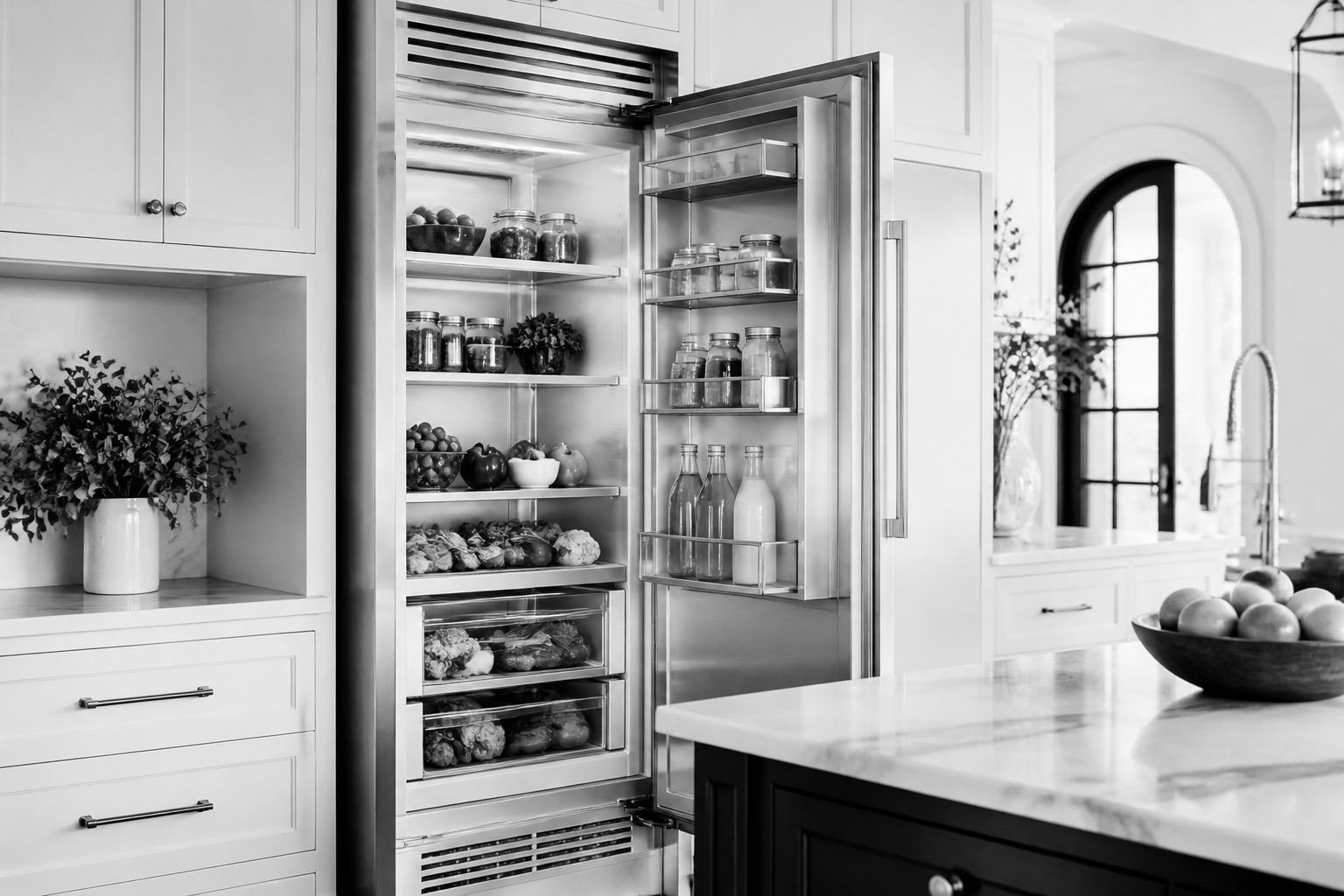
Make sure nobody turned the controls to a warmer position, both doors seal fully, and groceries are not covering the interior air vents. Look at the unit where it normally stands and do not force panels, fittings, or dials. If a small change helps, give the fridge normal running time before judging the result.
When the freezer side is cold but the fresh-food side is warm, write that down; it suggests an airflow or defrost problem. Also watch for a pattern: does it happen constantly, only with certain contents or settings, or after the fridge has run a while? That detail tells you more than switching it off and on again and again.
How do placement and loading affect cooling?
Whirlpool Product Help gives an operating range of 55 F to 110 F for the room and advises against installing the refrigerator near an oven, radiator, or other heat source, behind a cabinet door, or with the base grille blocked. A newly installed refrigerator needs about a day to cool, and the same page suggests waiting at least a day between control adjustments.
Large loads of warm food and frequent door openings also warm the refrigerator, and it can take several hours to stabilize. Keep air vents free of food so cold air can move between the sections.
| What you see |
Possible reason |
Owner check |
| Fresh-food side warm |
Vents covered |
Move food away from the vents |
| Freezer and fridge both warm |
Power, control, or cooling-system problem |
Look at the outlet and control settings |
| Frost forming |
Restricted airflow |
See whether the doors shut fully |
Safe checks that protect the appliance
The use-and-care manual lists the controls, filter locations, and service intervals that apply to your exact model. Limit cleaning to parts it calls user-serviceable, stick with the cleaning products it names, and put each removable piece back the way it was meant to sit.
Prior to another attempt, clear anything in the way, lighten a load that is unusually heavy, and confirm nothing restricts airflow, water supply, or door clearance. Resetting again and again is a poor idea, because it can mask a fault that comes and goes, and it can leave water, heat, or pressure where it does not belong.
- Write down any message or error code on the display before it is cleared.
- Inspect hoses, vents, gaskets, and plugs by eye, leaving electrical connections alone.
- Run a single deliberate test instead of several attempts in quick succession.
Okay to attempt
- Review the control settings and door gaskets
- Leave the vents uncovered
- Look after perishable food
Technician’s job
- Break into the sealed refrigerant circuit
- Check wiring at the compressor
- Take apart fan or control assemblies
Do coils, seals, and sounds matter for cooling?
Whirlpool says that not every model needs coil cleaning, that some can only be cleaned by a technician, and that normal homes rarely need routine cleaning. Cleaning intervals vary between Whirlpool pages, so follow the instructions for your own model. Where the manual shows it, the steps are to cut power, remove the base grille, vacuum the area gently, and replace the grille without bending the fins or tubing.
For the door seal, Whirlpool’s freezer pages describe a test with a sheet of paper or a bill closed in the door. If it slides out with little resistance, the seal may not be tight at that spot, so test several places and clean the gasket with mild soap and warm water.
Not every sound means a fault. Humming, clicking, gurgling, and swooshing are listed as normal, and so are popping or cracking from wall expansion. Chattering while dispensing, grinding when the door opens, or rattling from an unlevel unit are worth a closer look.
Know when the symptom needs diagnosis
Once the basic checks leave the symptom unchanged, stop where owner work ends. Anything involving control boards, gas connections, refrigerant lines, motors, pumps, heating circuits, and wiring inside the cabinet requires proper test equipment and a technician able to confirm a repair is safe.
Book a visit without delay if performance keeps slipping, a breaker trips, water appears near electrical parts, there is a hot or burnt smell, a new grinding sound starts, or a normal cycle will not finish. A unit showing a safety warning should not be kept running.
What can a warm fridge tell you?
A freezer that is cold while the fresh-food section is warm points to airflow or defrost, which a technician needs to test. Both sections warm points toward power, control, or the cooling system. A display showing a flashing F on some models has a documented single reset: switch the breaker off or unplug the unit for about a minute, then watch the display. If it persists, book service.
What to tell the technician
Have the model number ready, plus a precise description of the symptom, the start date, the settings in use, and what the safe checks showed. Photographing a displayed code or describing a noise in a few words is useful too, though never take a cover off to get one.
Watching closely does not replace a repair, yet it is the right place to begin. Deal with the easy conditions, hold on to any error details, and hand electrical, gas, sealed-system, and inside-the-machine mechanical jobs to a qualified technician.
Common questions
Why is my Whirlpool refrigerator warm but the freezer is cold?
That pattern points to airflow between the sections or a defrost issue, since the freezer is making cold air that is not reaching the fresh-food side. Clear the vents inside and book a diagnosis if it persists.
How long should I wait after changing the temperature setting?
Whirlpool Product Help suggests waiting at least a day between adjustments, because the refrigerator needs time to respond. Changing the dial repeatedly can hide the real pattern.
Do I need to clean the condenser coils?
Coil cleaning is not required on every model, and on some it is technician-only work. Your manual says whether yours has coils meant for owner care and what the steps are.