Simple maintenance for Whirlpool appliances comes down to a few habits: clean the filters and screens the manual names, keep seals and vents clear, and run the cleaning cycles your model offers. Anything beyond that, such as internal parts or gas and electrical connections, belongs to a technician.
Maintenance is easy to put off while everything seems fine, and that is exactly when a calm look around costs the least. A single symptom never names a failed part, so rely on observations that are safe, repeatable, and handy to share if you later book a Whirlpool service visit.
Owner-level upkeep sits on one side of a line, and anything involving testing or dismantling sits on the other. A lock, a safety switch, or an on-screen message should never be worked around so a machine keeps running. A few written observations today make a later diagnosis quicker and more precise.
Start with the simple conditions
Take one appliance at a time and use its manual to find the filters, seals, trays, and cleaning cycles meant for homeowner care. Leave it where it normally sits and never force panels, fittings, or controls. When a small adjustment changes the result, run one ordinary cycle before deciding anything.
Upkeep pays off most when it happens before anything goes wrong, so put each recurring task on a calendar instead of waiting for an error to appear. Note any pattern as well: does the problem show up every time, only with a certain load or setting, or once the machine has been running a while? That clue beats restarting it over and over.
Which laundry care does Whirlpool document?
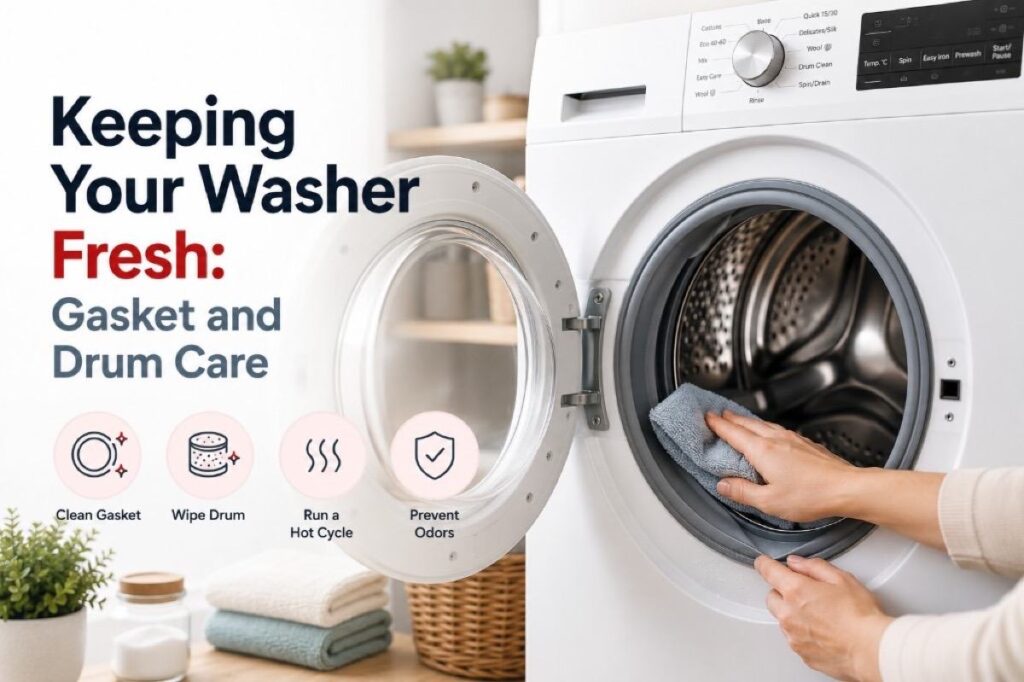
For washers, Whirlpool Product Help recommends running the Clean Washer cycle at least monthly or every 30 wash cycles. The cleaner is placed in the basket rather than the dispenser, and no detergent goes in with it. Leave the lid or door open afterward so the interior can dry.
Use only high-efficiency detergent in HE washers, because regular detergent or too much of it creates suds that can cause leaks, drainage trouble, and poor rinsing. Thickened or easy-pour bleach also adds suds. On front-load models, wipe the door seal dry after loads and look for lint or small objects folded into it.
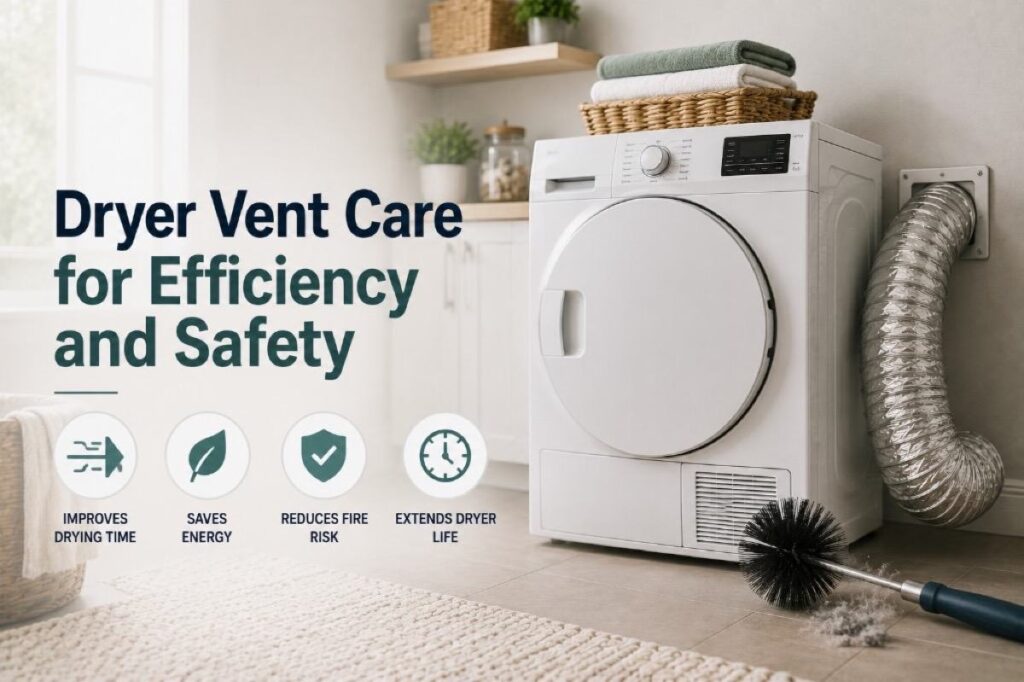
For dryers, clean the lint screen after every use. Fabric softener can leave a film that is hard to see, so wash the screen occasionally. The vent to the outside needs cleaning at the interval the manual gives, or sooner if drying slows, and the outdoor cover should be checked for nests and debris.
| Chore |
Timing |
Benefit |
| Rinse the dishwasher filter |
Monthly |
Keeps drainage clear |
| Wipe the door gaskets |
Monthly |
Helps the door seal |
| Wash the hood grease filters |
Monthly |
Keeps air moving |
Safe checks that protect the appliance
Your model’s use-and-care manual spells out its controls, filter access points, and upkeep schedule, so read it before acting. Touch only the parts it describes as user-serviceable, choose the cleaners it recommends, and reseat every removable component in its designed position.
Another cycle can wait until you have removed obstructions, lightened any unusually heavy load, and confirmed that nothing restricts air movement, the water supply, or the door. Resetting over and over is best avoided: an intermittent fault can stay hidden, and water, heat, or pressure may end up where it should not.
- Note what the display says, including any error code, prior to dismissing it.
- Look over the hoses, vents, seals, and plugs that you can see, without disturbing electrical connections.
- One careful test beats a string of rapid retries.
Which kitchen care depends on the model?
For dishwashers, never run the machine without the filters properly installed, and clean them with water and a soft brush instead of a scouring pad. Interval and removal steps differ between Whirlpool sources and models, so follow the instructions for your own dishwasher.
For ovens, the self-clean cycle needs preparation. The manual tells owners to remove racks and pans, hand-clean the door edge and frame area, and avoid cleaning or moving the door gasket. Foil should not line the oven bottom, because it can damage the finish.
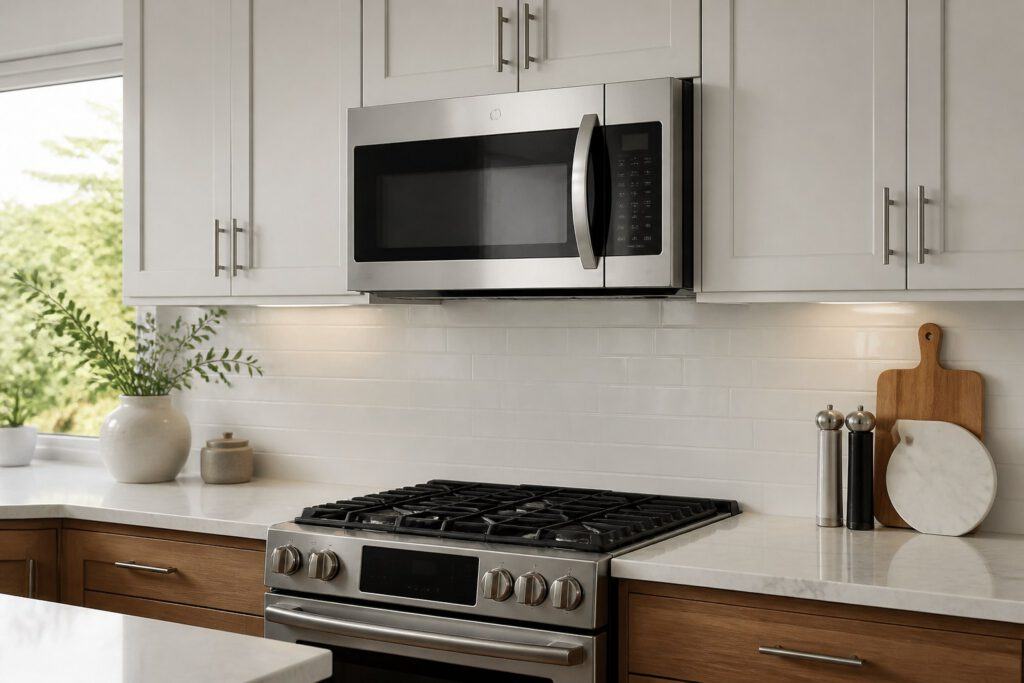
For microwaves, manuals for many Whirlpool models say to keep the cavity, the door-frame contact area, and the cover over the microwave inlet clean to avoid arcing, to avoid abrasive pads, and not to run the microwave empty.
Owner-safe checks
- Do the cleaning steps the manual lists
- Use a descaler the manual approves
- Wipe vents and gaskets clean
Hand to a technician
- Oil moving parts inside the machine
- Take off outer or inner panels
- Put strong chemicals on gaskets
Know when the symptom needs diagnosis
When the basic checks leave the symptom unchanged, stop at the edge of owner work. Anything involving refrigerant lines, gas connections, heating circuits, internal wiring, motors, pumps, and control boards needs proper test equipment and a technician who can confirm the repair is safe. On a gas appliance, the smell of gas means leaving the area and calling your gas supplier from outside, not continuing to test the appliance.
Get service lined up quickly when results are declining, the breaker trips, a leak reaches electrical parts, a hot or burning odor develops, a fresh grinding noise appears, or the machine cannot finish an ordinary cycle. Keep using nothing that displays a safety warning.
What to tell the technician
A technician will want the model number, a clear account of the symptom, when it started, which settings were chosen, and how the safe checks turned out. A picture of a code or a brief description of a sound adds to that, but no cover should be removed to capture either.
Observation will not fix anything, though it makes the best opening move. Handle the simple conditions, keep whatever error information you have, and send wiring, gas work, sealed-system work, and internal mechanical repairs to a qualified technician.
Common questions
How often should I clean my Whirlpool washer?
Whirlpool Product Help advises running the Clean Washer cycle at least monthly or every 30 wash cycles, and leaving the lid or door open between uses. Your use-and-care manual may name a different routine for your model.
Is it safe to use any cleaner on appliance seals and interiors?
Only use cleaners the manual for your appliance recommends. Whirlpool warns that more bleach than specified can damage a washer over time, and abrasive pads can scratch microwave and cooktop surfaces.
What maintenance should I leave to a technician?
Anything that means removing a panel or touching wiring, pumps, motors, gas connections, or sealed refrigeration parts. Homeowner care stops at the filters, screens, seals, and cleaning cycles described in the manual.